The Science
Understanding Lutein
Explore the science behind one of the naturally occurring carotenoids found in the eye.
Section One
What Is Lutein?
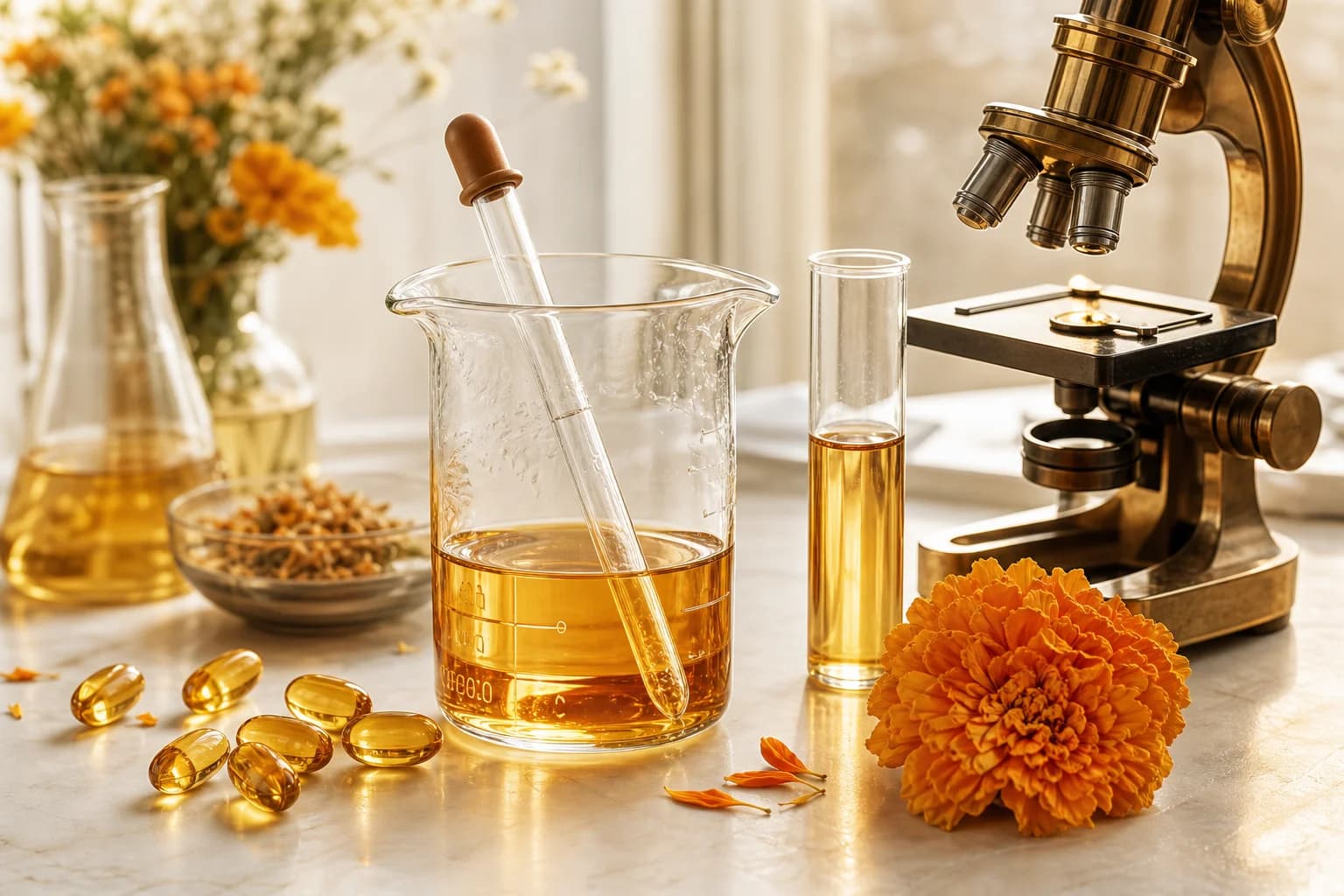
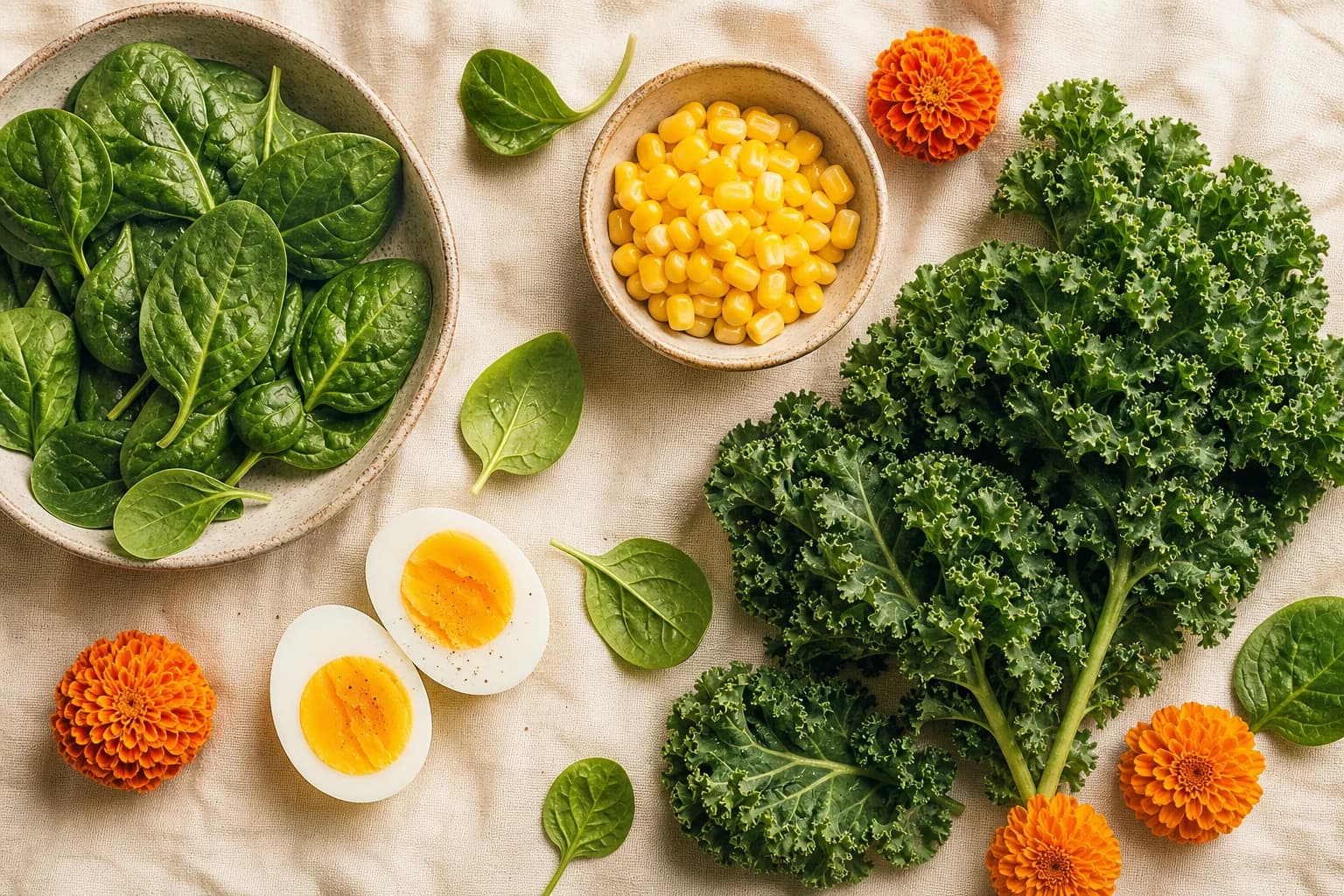
Lutein is a naturally occurring carotenoid — a type of pigment found in foods like spinach, kale, corn, and egg yolks. It belongs to a family of plant compounds that give many foods their yellow and orange hues. The human body cannot make lutein on its own — it must come from diet or supplementation — and it is one of the very few carotenoids the body deposits directly into the eye.
Section Two
Lutein & The Eye
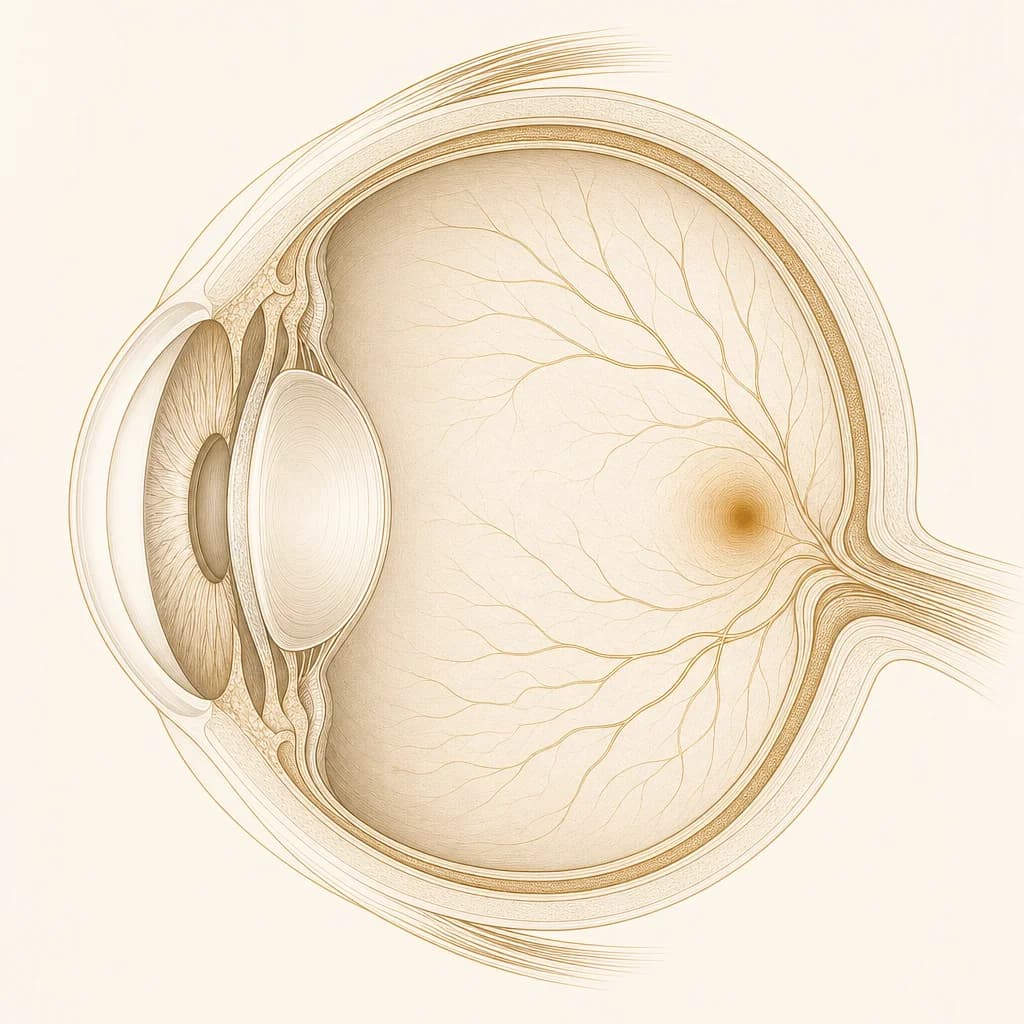
Lutein is naturally present in the eye, concentrated in the macula — the central part of the retina responsible for detailed, central vision. There it forms part of the macular pigment, a yellow protective layer at the very center of your visual field. Research shows the density of this pigment can be measurably increased through consistent lutein intake — which is why it is one of the most studied nutrients in eye health.
Section Three
Lutein & Light
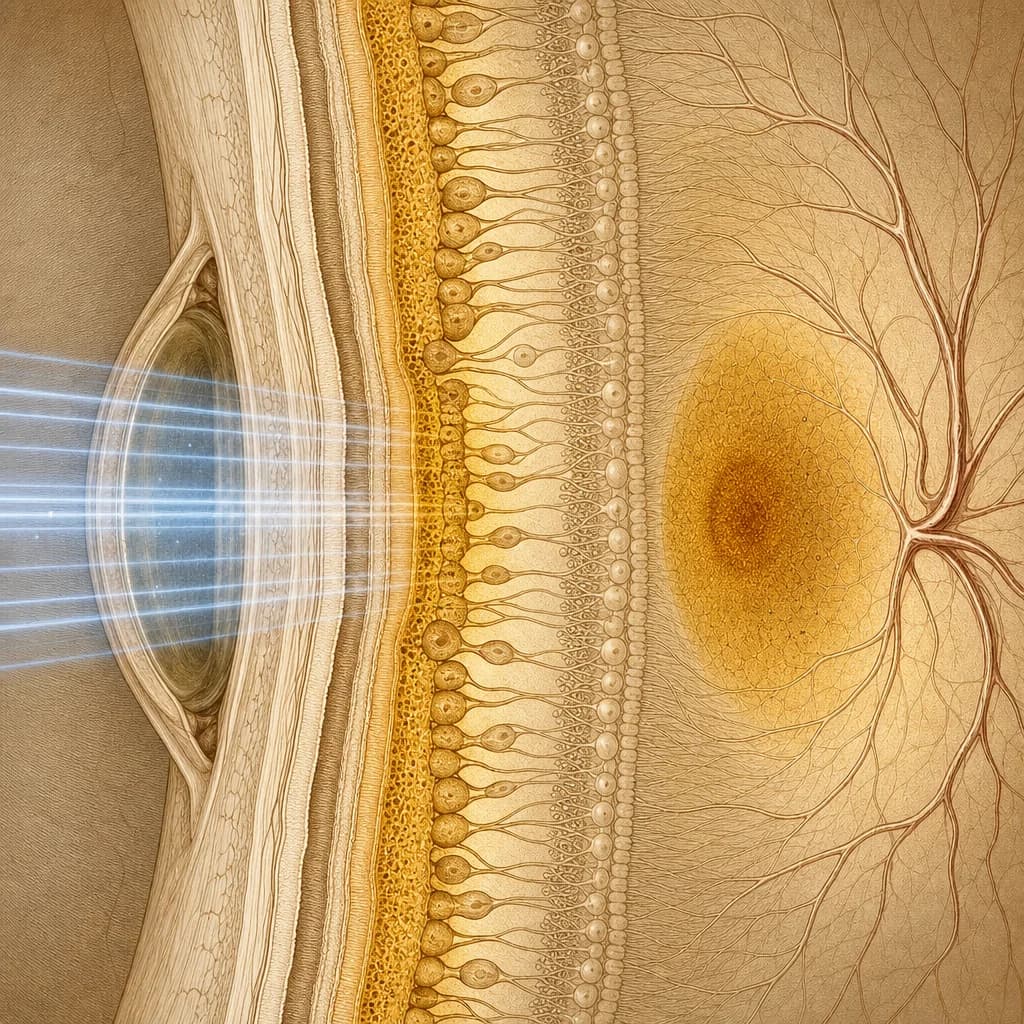
Looking deeper into the macula reveals why lutein matters. The macular pigment sits in front of the light-sensing cells of the central retina, where it absorbs high-energy blue light — the same wavelengths emitted by screens, LED lighting, and sunlight — before it reaches the delicate structures beneath.
Researchers often describe it as the eye's own internal filter: lutein absorbs light most strongly in the blue range of the visible spectrum, and also functions as an antioxidant in the retina — one of the most metabolically active tissues in the body.
Section Four
Beyond the Eye: Lutein & Skin
The eye is not the only place the body stores lutein. It also accumulates in the skin — the organ most exposed to sunlight — where it works the same way it does in the macula: absorbing high-energy light and acting as an antioxidant where light exposure is greatest.

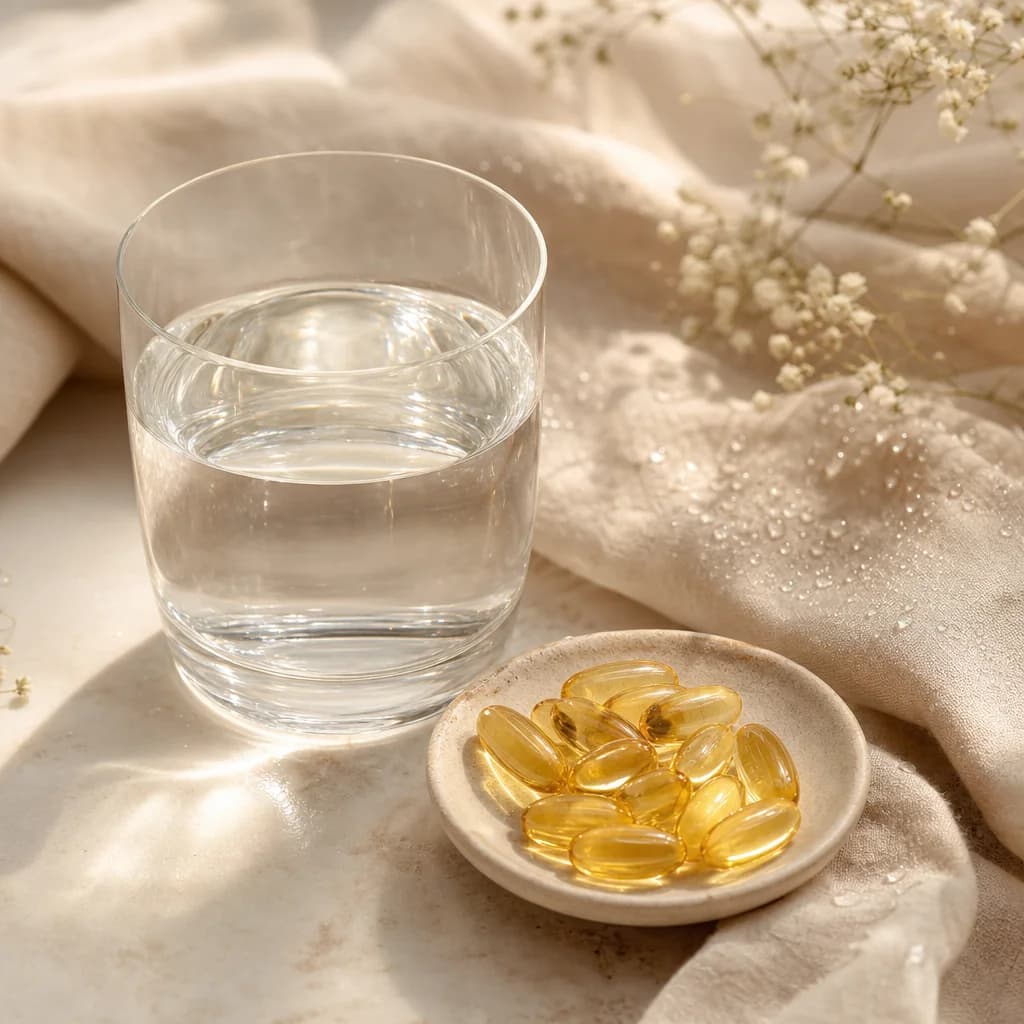
Hydration
In clinical research, twelve weeks of daily lutein intake measurably improved skin hydration — supporting the skin barrier from within, not just at the surface.
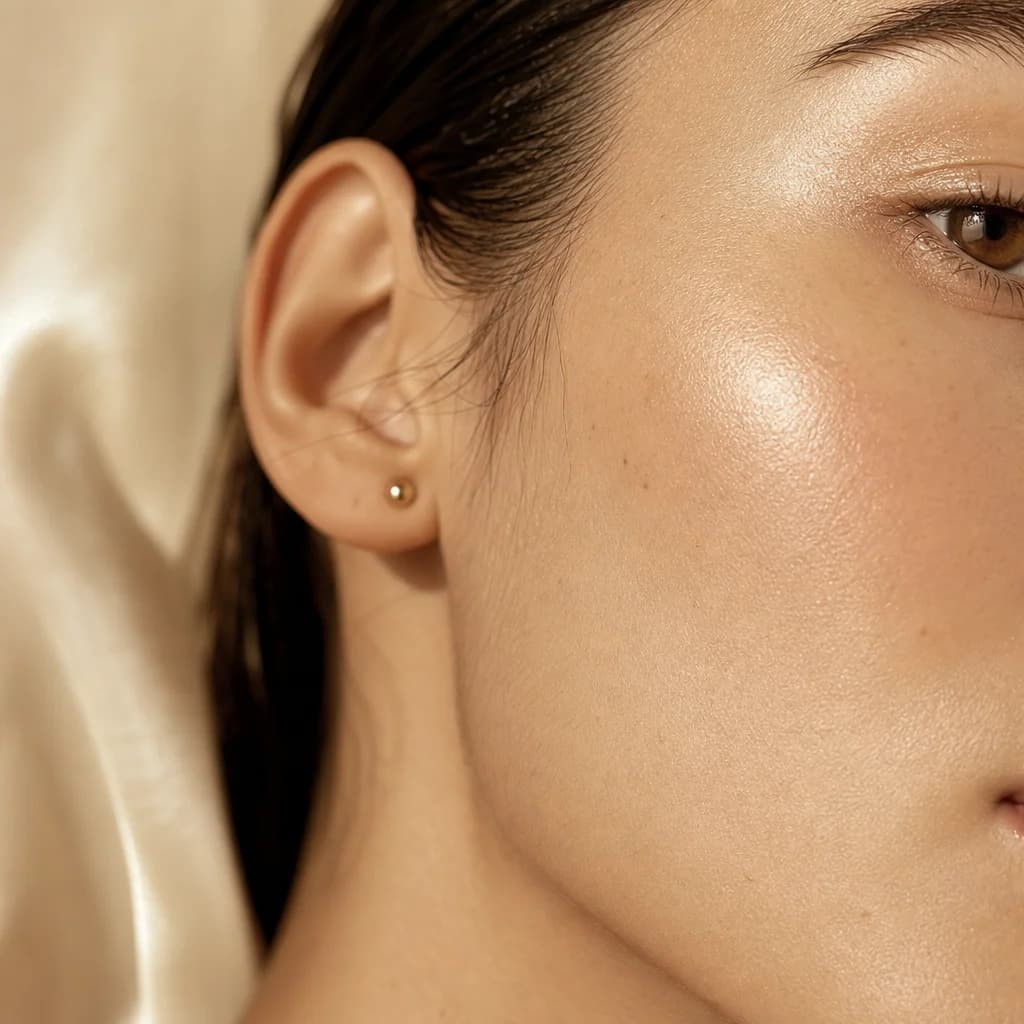
Elasticity
The same research observed improvements in skin elasticity and surface lipids — two markers closely tied to how smooth, supple, and resilient skin looks and feels.

Light Defense
Lutein absorbs high-energy blue light and neutralizes free radicals generated by sunlight — a quiet, daily layer of antioxidant support for light-exposed skin.
Section Five
What Does the Research Say?
Lutein is one of the most extensively studied carotenoids in human nutrition, with decades of peer-reviewed research across both eye health and skin health.
Vision & Light
JAMA · 2013
The AREDS2 Study
The Age-Related Eye Disease Study 2, a landmark multi-year clinical trial led by the National Eye Institute (NIH) with over 4,000 participants, evaluated daily macular carotenoid supplementation and established lutein as a core component of the modern reference formula for eye-health nutrition.
Optometry & Vision Science · 2008
Visual Performance in Glare
Research by Stringham & Hammond found that adults with higher macular pigment density performed measurably better in bright-light conditions — including improved glare tolerance and faster visual recovery after light exposure — and that supplementation increased pigment density over six months.
Foods · 2017
Screen Time & Eye Strain
In a placebo-controlled trial of healthy adults with high daily screen exposure, six months of daily macular carotenoid supplementation improved measures of eye strain, eye fatigue, and sleep quality compared to placebo.
British Journal of Nutrition · 2009
Computer Screen Exposure
A 12-week randomized trial by Ma et al. followed adults with long-term daily computer display exposure. Those taking daily lutein showed measurable improvements in visual function — including contrast sensitivity, a key marker of how clearly the eye distinguishes detail — compared to those who did not.
PLOS ONE · 2014
Visual Processing Speed
Bovier & Hammond found that four months of daily macular carotenoid supplementation significantly increased visual processing speed in young, healthy adults — evidence that macular carotenoids support visual performance even in people whose eyes are at their peak.
IOVS · 2014
Glare & Light Recovery
In a year-long double-blind, placebo-controlled study, Hammond et al. reported that daily macular carotenoid supplementation increased macular pigment density and improved chromatic contrast and photostress recovery — how quickly vision bounces back after exposure to bright light.
Skin & Sunlight
Skin Pharmacology & Physiology · 2007
Skin Hydration & Elasticity
A twelve-week clinical study by Palombo et al. found that daily oral macular carotenoid intake significantly improved skin hydration, elasticity, and surface lipids — while also increasing the skin’s photoprotective activity against light-induced stress.
Clin. Cosmetic & Investigational Dermatology · 2016
Skin Tone & Luminance
In a twelve-week randomized, double-blind, placebo-controlled trial, Juturu et al. reported that daily macular carotenoid supplementation measurably improved overall skin tone and luminance compared to placebo in healthy adults.
Journal of Ophthalmology · 2015
Sunlight & Photoprotection
A review by Roberts & Dennison on the photobiology of macular carotenoids describes how they accumulate in skin, filter high-energy visible light, and help neutralize free radicals generated by everyday sunlight exposure.
Summaries of publicly available peer-reviewed research, provided for education. Individual results vary.
Section Six
Lutein in Everyday Wellness
Because the body cannot produce lutein on its own, consistency is what matters most — researchers observe changes in macular pigment over months of steady daily intake, not days. Many people pair a daily lutein softgel with simple habits like reducing screen glare and taking regular visual breaks. JUROVA Lutein Softgels are designed to make that one small daily part effortless.
Shop LuteinThese statements have not been evaluated by the Food and Drug Administration. This product is not intended to diagnose, treat, cure, or prevent any disease.